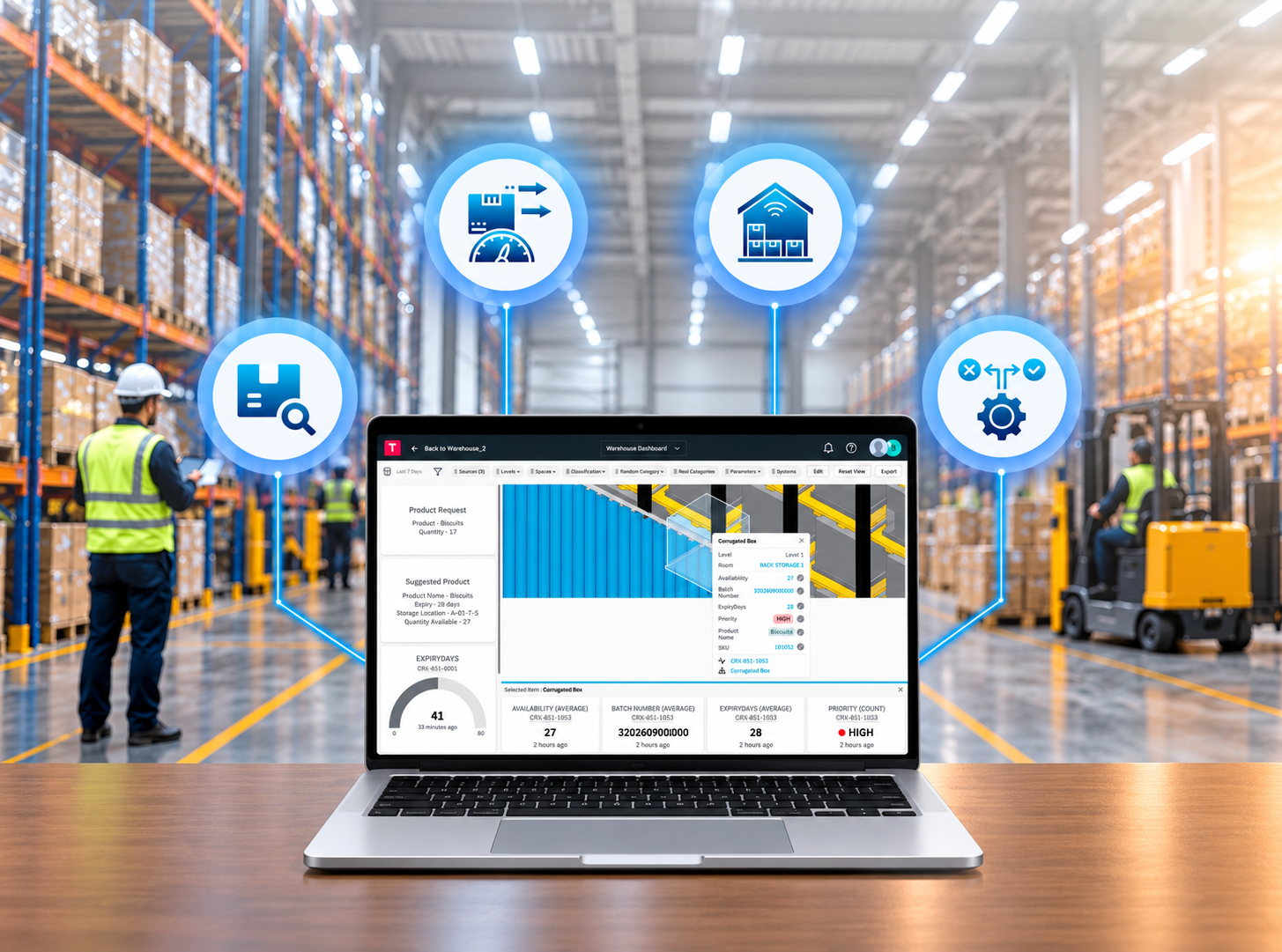
Introduction: Moving Beyond Traditional Warehouse Operations
Modern warehouses are under increasing pressure to improve productivity, optimize space utilization, accelerate order fulfilment, and maintain smooth operations. As facilities grow in scale and complexity, managing warehouse activities through disconnected systems and conventional monitoring methods can make it difficult to gain a complete view of operational performance.
Traditional warehouse operations often rely on multiple tools to manage inventory, equipment, workflows, and facility information. While these tools serve important purposes, information may remain distributed across different platforms, limiting the ability to understand how various elements interact.
Digital Twin technology is emerging as a powerful approach to building more connected and intelligent warehouse operations. By creating a digital representation of a physical warehouse and integrating relevant operational information, organizations can gain better visibility into their facilities, identify inefficiencies, and make more informed decisions.
What Is a Digital Twin in Warehouse Operations?
A Digital Twin in warehouse operations is a digital representation of a physical warehouse that brings together information about its layout, assets, equipment, infrastructure, and operational conditions.
Unlike a static 3D model, a Digital Twin can be connected to existing systems and operational information to provide a more dynamic view of the physical facility. Depending on the implementation, it can incorporate information from Warehouse Management Systems (WMS), Building Management Systems (BMS) , IoT devices, sensors, equipment monitoring platforms, and other operational technologies.
This connected digital environment helps teams understand the relationship between physical assets, warehouse spaces, and operational activities.
For example, a facility manager may use a Digital Twin to locate equipment, understand the surrounding infrastructure, review equipment status, or investigate operational issues within the context of the warehouse layout.
The objective is to move beyond isolated information and create a more comprehensive understanding of warehouse operations.
Keyways Digital Twins Are Transforming Warehouse Operations
-
1. Improving Warehouse Operational Visibility
One of the biggest challenges in warehouse management is obtaining a clear view of what is happening across the facility. Information about equipment, assets, layouts, and operational activities may exist in separate systems, making it difficult to assess the overall situation.
A warehouse Digital Twin can bring relevant information into a connected digital environment, helping teams visualize physical spaces, locate assets, and understand operational conditions more effectively. With improved visibility, warehouse managers can investigate issues faster, coordinate activities more effectively, and make decisions based on a better understanding of the facility.
-
2. Identifying Operational Bottlenecks
Warehouse productivity depends on the smooth movement of goods, people, and equipment. Congested areas, inefficient workflows, equipment downtime, and poorly coordinated activities can affect operational performance.
Digital Twins help organizations understand how different elements of a warehouse interact. By combining spatial context with available operational information, teams can investigate bottlenecks, identify areas requiring attention, and evaluate opportunities for improvement.
As Digital Twin capabilities mature, organizations may also use simulation and scenario analysis to assess proposed changes before implementing them in the physical facility.
This can support more informed decisions about warehouse layouts, operational workflows, and resource allocation.
-
3. Optimizing Warehouse Space and Asset Utilization
Warehouse space is a valuable operational resource. Poor visibility into facility layouts, asset locations, and space utilization can lead to inefficient use of available capacity.
A Digital Twin provides a visual representation of warehouse spaces and assets, helping teams understand how the facility is structured and how different areas are utilized.
When integrated with relevant operational information, this representation can support the identification of underutilized spaces, asset-location challenges, and opportunities to improve facility organization.
Better visibility into physical infrastructure can help warehouse operators make more informed decisions about space planning, equipment placement, and future facility modifications.
-
4. Supporting Proactive Equipment Maintenance
Equipment reliability is essential to maintaining uninterrupted warehouse operations. Unexpected equipment failures can disrupt workflows, delay fulfilment, and increase maintenance costs.
Traditional maintenance approaches may depend on scheduled inspections or reactive responses after a problem occurs.
By connecting a Digital Twin with equipment monitoring systems and available sensor information, organizations can gain better visibility into equipment conditions and operating status.
This can help maintenance teams identify abnormal conditions earlier, understand the location and context of affected equipment, and prioritize maintenance activities.
When supported by suitable historical information and analytical capabilities, Digital Twins can also contribute to predictive maintenance strategies, helping organizations move toward more proactive equipment management.
-
5. Enhancing Operational Decision-Making
Warehouse decisions often involve several interconnected factors, including asset availability, facility layout, equipment performance, and operational priorities.
When information is fragmented, understanding the wider impact of a decision can be challenging.
A Digital Twin provides a common digital view that connects physical assets, spatial information, and relevant operational insights. This helps teams investigate issues within their operational context rather than relying exclusively on isolated reports or individual systems.
For example, teams can use the digital representation of a warehouse to understand where an issue is occurring, which assets may be involved, and what additional information is needed to determine the next course of action.
The result is a more informed approach to operational planning, troubleshooting, and continuous improvement.
Digital Twin vs. Traditional Warehouse Management Systems
Warehouse Management Systems (WMS) play a critical role in managing inventory, order processing, picking, packing, and warehouse workflows. However, a WMS and a Digital Twin serve different purposes.
A WMS primarily manages warehouse processes and transactions. A Digital Twin adds a connected digital representation of the physical facility, helping teams understand the spatial and operational relationships between assets, equipment, infrastructure, and activities.
Rather than replacing existing warehouse systems, a Digital Twin can complement them by connecting relevant information and presenting it in a more contextualized environment.
This combination enables organizations to move beyond managing individual warehouse processes toward developing a broader understanding of facility operations.
How to Get Started with a Warehouse Digital Twin
Implementing a Digital Twin does not necessarily require replacing existing infrastructure or systems. Organizations can begin by identifying specific operational challenges and determining which information would help address them.
A practical approach includes:
- Define operational objectives: Identify priorities such as improving visibility, reducing equipment downtime, or optimizing space utilization.
- Map existing systems: Understand which platforms already manage warehouse, asset, equipment, and facility information.
- Connect relevant information: Integrate suitable data sources to establish a more connected view of warehouse operations.
- Develop the digital representation: Create a digital model of the facility and associate relevant assets and operational information.
- Expand based on business needs: Build on the initial implementation as new use cases and operational requirements emerge.
Starting with clearly defined objectives helps organizations focus on measurable business value rather than adopting technology without a specific operational purpose.
Conclusion: Building the Intelligent Warehouse of the Future
The future of warehousing is not defined by automation alone. It also depends on how effectively organizations connect physical infrastructure, operational systems, and facility information to understand what is happening across their warehouses.
Digital Twins for warehouse operations offer a pathway from traditional facility management toward more connected, visible, and intelligent operations. By improving operational visibility, supporting proactive maintenance, identifying bottlenecks, and enabling better-informed decisions, Digital Twins can help organizations uncover opportunities for continuous improvement.
As warehouse environments become increasingly complex, understanding the facility as a connected whole will become a key advantage.
With Digital Twin-enabled solutions such as EnvirOptimus , organizations can adopt a more integrated approach to facility visibility and intelligent operations, laying the foundation for smarter warehouse management.