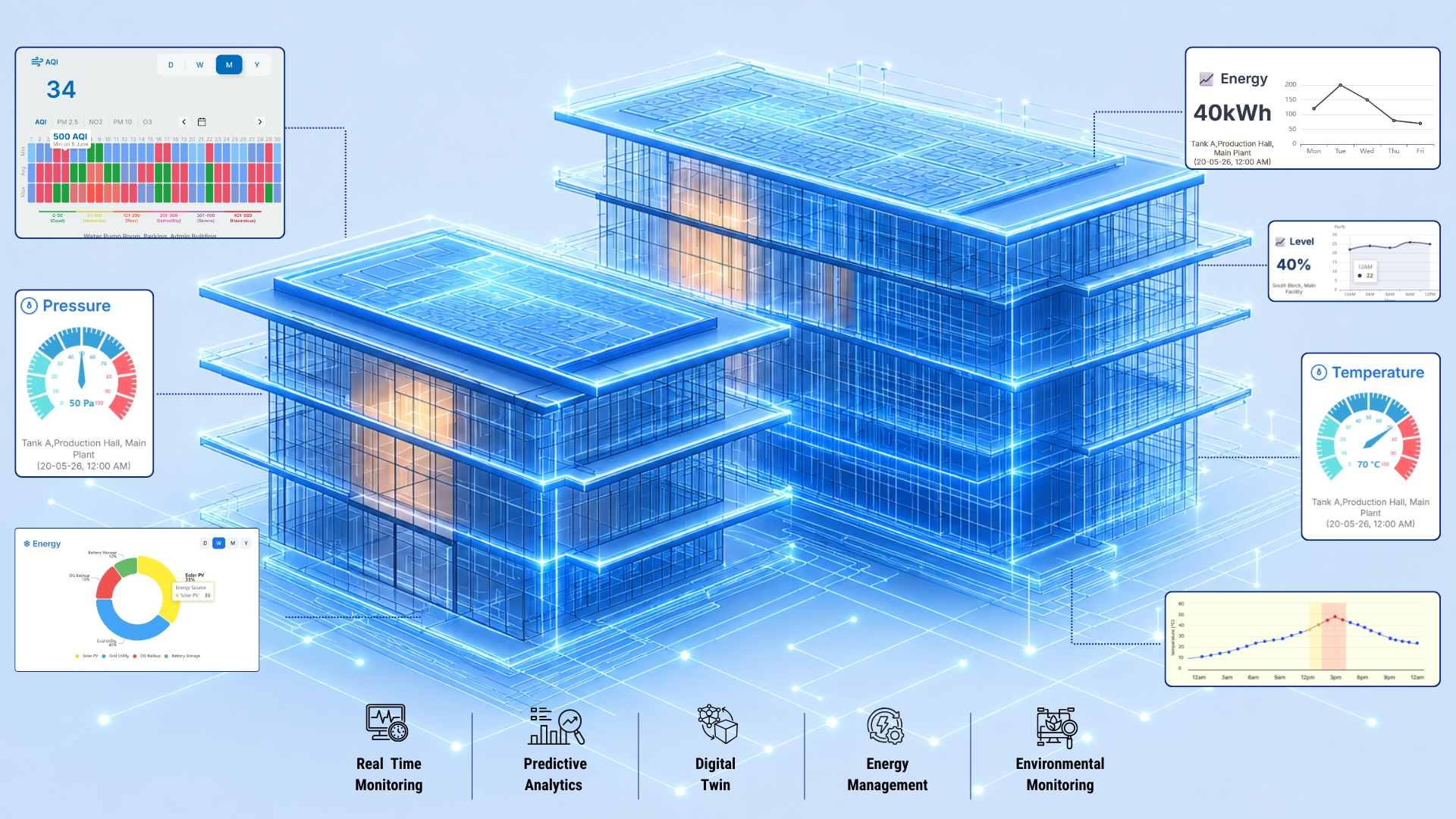
Digital twin technology has transformed from a futuristic buzzword into a cornerstone of next-generation enterprise operations. At its core, a digital twin is a dynamic, virtual representation of a physical object, system, or process that continuously simulates and reflects real-world performance using live data streams. When implemented correctly, digital twins evolve far beyond mere mirrors; they become living, learning, and proactive systems that inform decisions, optimize operations, and even trigger automated actions.
But all too often, organizations stop at creating a digital twin that looks like the physical system. They build replicas. And then… nothing. A true digital twin should do more than represent; it should respond, predict, optimize, and even reinvent the way systems perform. In this blog, we explore why many digital twins fall short, how to activate them, and how technologies such as IoT-enabled sensing, cloud-AI integration, and real-time analytics can turn static twins into living digital beings that generate value across industries.
What Is a Digital Twin — Beyond the Replica
A digital twin is not merely a 3D model or static representation of a physical system. Rather, it is a continuously synchronized virtual counterpart that leverages real-time data, analytics, and predictive intelligence to mirror and forecast the behaviour of its physical twin. In the most advanced deployment
- Sensors and IoT devices feed live performance data.
- Cloud and edge computing consolidate real-time information.
- Analytics and machine learning models forecast performance, detect anomalies, and recommend interventions.
- Decision engines and automation layers enable corrective or adaptive actions.
Why Many Digital Twins Remain Just Replicas
Creating a digital model is only the first step. Many organizations treat digital twins as digital shadows, attractive visual representations that look nice but do not transform operations. Common pitfalls include:
- Limited Data Integration: A digital twin that isn’t fed live data from sensors, meters, and other systems is static. Without real-time input, it cannot reflect changing conditions or predict future states.
- Absence of Predictive Analytics: Without predictive models powered by AI/ML, a digital twin can’t forecast failures or suggest improvements. Simply mapping the current state to a virtual model isn’t enough.
- Lack of Automation: Digital twins should act, not just analyse. Insights need to be actionable and tied to automated responses or provided to decision-makers in operational workflows.
- Isolated Use Cases: When digital twins are built for narrow functions without connecting to broader enterprise processes (e.g., maintenance, sustainability, operations), they fail to unlock systemic value.
Core Pillars of Bringing Digital Twins to Life:
To transition a digital twin from a static replica to a living system, organizations must focus on several foundational elements:
- Real-Time IoT Data Backbone: A living digital twin thrives on live data from physical systems, whether from sensors on machines in factories, meters in energy infrastructure, or environmental monitoring in buildings . These real-time feeds are the lifeblood, enabling accurate, up-to-the-moment simulations.
-
Analytics + Predictive Intelligence:
Machine learning and advanced analytics convert raw data into meaningful insights.
- Predict equipment failure before it happens.
- Simulate future scenarios (e.g., energy patterns during peak loads).
- Forecast demand and demand response strategies.
Without intelligence, a digital twin remains descriptive rather than prescriptive. -
Feedback Loop and Automation:
A digital twin should connect insights back to actions. For example:
- Automatically adjusting HVAC or lighting systems in smart buildings based on predicted occupancy and energy patterns.
- Triggering maintenance tasks when predicted failure risk crosses thresholds.
- Rebalancing energy loads in a grid to avoid overuse penalties.
This feedback loop is what converts twin insights into operational value. - Cloud + Edge Architecture: A living digital twin must handle large data volumes and low-latency requirements. Distributed architectures combining cloud scalability and edge responsiveness enable real-time simulation and decision-making.
Digital Twin Ecosystems: From BIM & BMS to Living, Environmental Intelligence
Bringing a digital twin to life is not tied to a single platform or vendor. In practice, organizations adopt digital twin ecosystems in different ways, ranging from established BIM-centric platforms to fully customized software and hardware stacks depending on scale, complexity, and sustainability goals.
BIM-Led Digital Twins (Autodesk, Tandem & Ecosystem Platforms)
Industry platforms such as Autodesk play a foundational role in digital twin adoption, especially during design, construction, and handover phases. BIM models created with tools like Revit provide rich asset data, spatial context, and system relationships that serve as the starting point for a digital twin. Autodesk Tandem, for example, extends BIM into operations by serving as a connected digital-twin platform. It bridges design intent with operational data by integrating:
- BIM models and asset metadata
- Building Automation Systems (BAS) and Building Management Systems (BMS)
- IoT sensor data for real-time monitoring
This enables owners and facility teams to move beyond static BIM models and create a continuously updated digital representation of buildings that supports maintenance, asset tracking, and operational decision-making. However, BIM-centric twins typically focus on asset visibility and lifecycle management. To truly “bring them to life,” they must be augmented with real-time analytics, predictive intelligence, and automated control layers.
BMS / BAS-Driven Digital Twins
Many organizations start their digital twin journey from the operations side, leveraging existing Building Management Systems or Building Automation Systems infrastructure. These systems already capture live data from HVAC, lighting, electrical systems, and energy meters.
- Real-time operational visibility
- Equipment performance benchmarking
- Energy and comfort optimization
On their own, BMS platforms often remain reactive. Integrated with digital twin intelligence, they evolve into proactive, self-optimizing operational systems.
Custom Digital Twins: Software + Hardware + Intelligence
For organizations seeking deeper control, scalability, and sustainability impact, custom-built digital twins offer the highest level of flexibility. These solutions combine:
- Purpose-built IoT hardware and sensors
- Custom software platforms
- Cloud and edge analytics
- AI/ML models tuned to specific operational and environmental goals
Such digital twins are not constrained by vendor silos. They unify data across buildings, factories, utilities, or campuses, creating a single living system that adapts continuously. This approach is particularly powerful for:
- Large portfolios and campuses
- Industrial facilities
- Energy-intensive operations
- Organizations with aggressive sustainability and ESG targets
Digital Twins for Energy, Emissions & Environmental Performance
The next evolution of digital twins goes beyond assets and operations into environmental intelligence. Living digital twins can continuously track and optimize:
- Energy consumption and demand patterns
- Carbon emissions at asset, zone, and portfolio levels
- Indoor environmental quality (air quality, thermal comfort, occupancy)
- Renewable energy generation and storage performance
By combining real-time sensing, predictive analytics, and automated controls, digital twins become a governance layer for sustainability, enabling continuous optimization, compliance tracking, and data-driven ESG reporting.
Real-World Applications Across Industries
Energy & Utilities
In energy management , digital twins monitor systems from smart meters to grid-scale infrastructure. By integrating sensor inputs, twins can simulate energy distribution patterns, anticipate peaks, and optimize grid performance. Benefits include:
- Up to 15-30% reduction in energy consumption via predictive optimization.
- Ability to forecast renewable energy output based on weather and system conditions.
- Intelligent load balancing to reduce costs and meet sustainability goals.
Manufacturing
Digital twins represent production lines or inpidual machines to:
- Detect inefficiencies.
- Anticipate breakdowns.
- Optimize workflows for higher throughput and lower energy use.
In advanced factories, digital twins integrate production, quality, and supply chain data to create a living operational model that guides real-time decisions.
Healthcare
Emerging uses include digital twin organs or patient profiles to:
- Simulate treatment outcomes.
- Personalize care plans.
- Reduce trial-and-error in high-risk scenarios.
Though complex, these twins hold enormous potential for predictive, individualized healthcare.
Smart Cities and Infrastructure
Urban planners use digital twins of infrastructure to simulate:
- Traffic and transportation.
- Energy usage patterns.
- Emergency responses.
This helps optimize resource allocation and enhance quality of life.
How Businesses Can Bring Their Digital Twins to Life - A Practical Roadmap
Step 1: Define Clear Business Outcomes
Start with why you need a digital twin. Whether it’s improving asset uptime, reducing energy costs, or enhancing customer experiences, clear objectives guide implementation.
Step 2: Build a Solid Data Foundation
Ensure connected sensors, smart meters, IoT devices, and data pipelines are robust and secure. Without high-quality real-time data, a twin is lifeless.
Step 3: Integrate AI & Analytics
Deploy predictive and prescriptive analytics that can:
- Detect anomalies.
- Suggest actions.
- Run scenarios for future conditions.
Step 4: Enable Automated Actions
Connect analytics outcomes to automation tools in energy systems, maintenance workflows, or control systems.
Step 5: Monitor, Learn, Improve
A digital twin shouldn’t be “finished.” It should learn from outcomes, recalibrate predictions, and improve over time.
The Strategic Value of a Living Digital Twin
Moving beyond static replicas to dynamic living systems delivers powerful competitive advantages:
Operational Optimization
By leveraging real-time data, organizations can anticipate issues and prevent problems before they occur.
Energy Efficiency & Sustainability
A living twin continuously identifies opportunities to cut energy waste and reduce carbon footprints, especially vital for organizations aligning with global sustainability goals.
Resilient Decision-Making
Digital twins empower leaders with scenario planning and risk analysis, reducing guesswork in strategic decisions.
Cost Reduction
Predictive maintenance and optimized operations reduce unnecessary downtime and reactive firefighting, cutting costs
Conclusion — The Future of Digital Twins
The journey from a static model to a living digital twin is transformative. It requires strategic design, robust data integration, advanced analytics, and automated workflows. But the rewards are substantial: smarter operations, sustainable outcomes, and future-proof enterprise capability. Digital twins aren’t just digital replicas. When brought to life, they become living systems, adaptive, intelligent, and indispensable to modern business.
Are you ready to bring your digital twin to life?